


On January 28, 2026, India was struck by a heart-wrenching aviation disaster that claimed the life of Deputy Chief Minister of Maharashtra, Ajit Pawar, along with other individuals on board a private aircraft. The incident has triggered massive shock, introspection on aviation safety, and an urgent probe by authorities into what caused the aircraft crash under challenging conditions.
Among the harrowing details of this tragedy is the confirmation that pawns of identification had to be used, including Pawar’s personal watch and clothing, due to the severity of the crash impact and ensuing fire.
What Happened: Crash in Baramati


The Flight & Circumstances
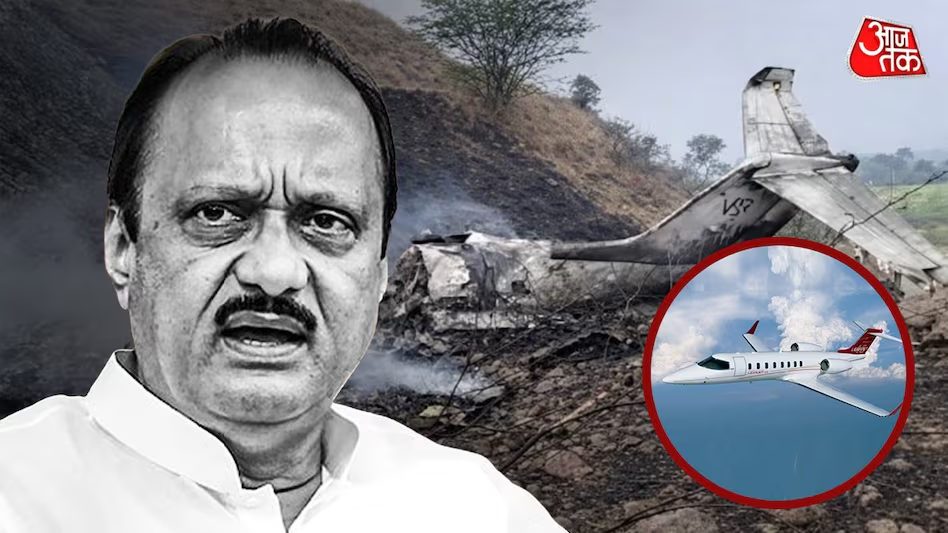
The ill-fated flight was a Learjet 45XR (registration VT-SSK), a light business jet operated under charter from Chhatrapati Shivaji Maharaj International Airport in Mumbai en route to Baramati Airport in Pune district, Maharashtra.
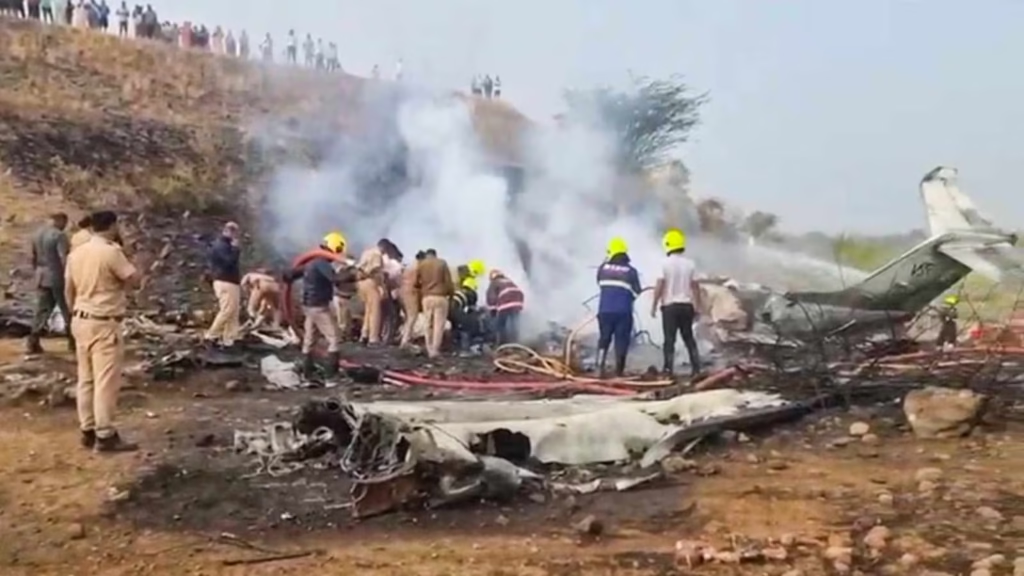
The aircraft was attempting to land at Baramati around mid-morning when it veered off the runway, crashed, and burst into flames upon impact. All five occupants on board were killed, including Pawar and four others.
Eyewitnesses described severe fire and multiple explosions that obscured the wreckage and made identification exceptionally difficult.
Cause & Contributing Factors: Fog, Visibility, and Confusion


Preliminary Reports and Weather Concerns
Early reports suggested that dense fog and heavy mist conditions around Baramati could have played a major role in impairing visibility during the aircraft’s final approach for landin,— leading investigators to consider weather as a significant factor in the crash.
However, some initial accounts from officials and aviation experts contradicted the notion of heavy fog, indicating that visibility at the time was relatively clear, raising questions about mechanical or procedural errors.
At this stage, no definitive cause has been declared, and authorities, including the Directorate General of Civil Aviation and the Aircraft Accident Investigation Bureau (AAIB), are expected to conduct detailed investigations.
Aftermath: Identification and Recovery Efforts
Body Identification by Watch & Clothes
The severity of the fire and extent of the wreckage meant visual identification of bodies on site was not feasible. Rescue and recovery teams worked under extremely difficult conditions. Eventually, Ajit Pawar’s body was identified using his personal wristwatch and clothes, along with corroborating details from police and medical examiners at the scene.
This painstaking method of identification underscores the tragic and violent nature of the crash impact.
Who Was on Board?
According to official reports and crash manifests:
- Ajit Pawar — Deputy Chief Minister of Maharashtra
- Two crew members (pilot-in-command and co-pilot)
- Personal security officer
- Flight attendant or aide
All fivon boardrd died in the crash.
Political Impact & Public Response
The death of Ajit Pawar has sent shockwaves across India, especially in Maharashtra, where he was a prominent leader. Political leaders from across the spectrum have publicly expressed grief, and state authorities have announced a period of mourning.
Prime Minister Narendra Modi and other national figures released statements praising Pawar’s political contributions and his role in governance and rural development.
Historical Context: Aviation Risks in Indian Politics

Aviation travel has historically been associated with risks for public figures — from military leaders to political stalwarts. The loss of Ajit Pawar adds to a somber list of Indian leaders who have perished due to aircraft accidents, including senior military officials and politicians in past decades.
Ongoing Investigation & Safety Questions
Several key agencies are now involved in determining what precisely led to this tragedy:
Aircraft Accident Investigation Bureau (AAIB)
Expected to lead forensic reconstruction and black box analysis.
DGCA (Directorate General of Civil Aviation)
Responsible for oversight of safety and compliance.
Local Police & Rescue Authorities
Handled on-site recovery and documentation of evidence.
Authorities will examine weather data, cockpit voice recorder and flight data recorder information, aircraft maintenance history, and landing procedures to arrive at an authoritative conclusion.
Why This Matters: Aviation Safety and Public Confidence
This tragedy reignites concerns around:
- Charter flight regulations in India
- Weather monitoring at smaller airports
- Pilot training and decision-making during low visibility
- Emergency response readiness
As India continues to expand its regional aviation infrastructure, lessons from this incident could shape future safety policy and regulations.
Conclusion
The news of Ajit Pawar’s aircraft crashing due to fog, the body identified by the watch and clothes, is a deeply saddening chapter in India’s aviation history. From the immediate shock and rescue efforts to the painstaking identification and continued investigations, this tragic event highlights both the fragility of life and the complexities involved in aviation safety. Our thoughts remain with the family of Ajit Pawar and others who lost their lives in this accident.







Leave a ReplyCancel reply