

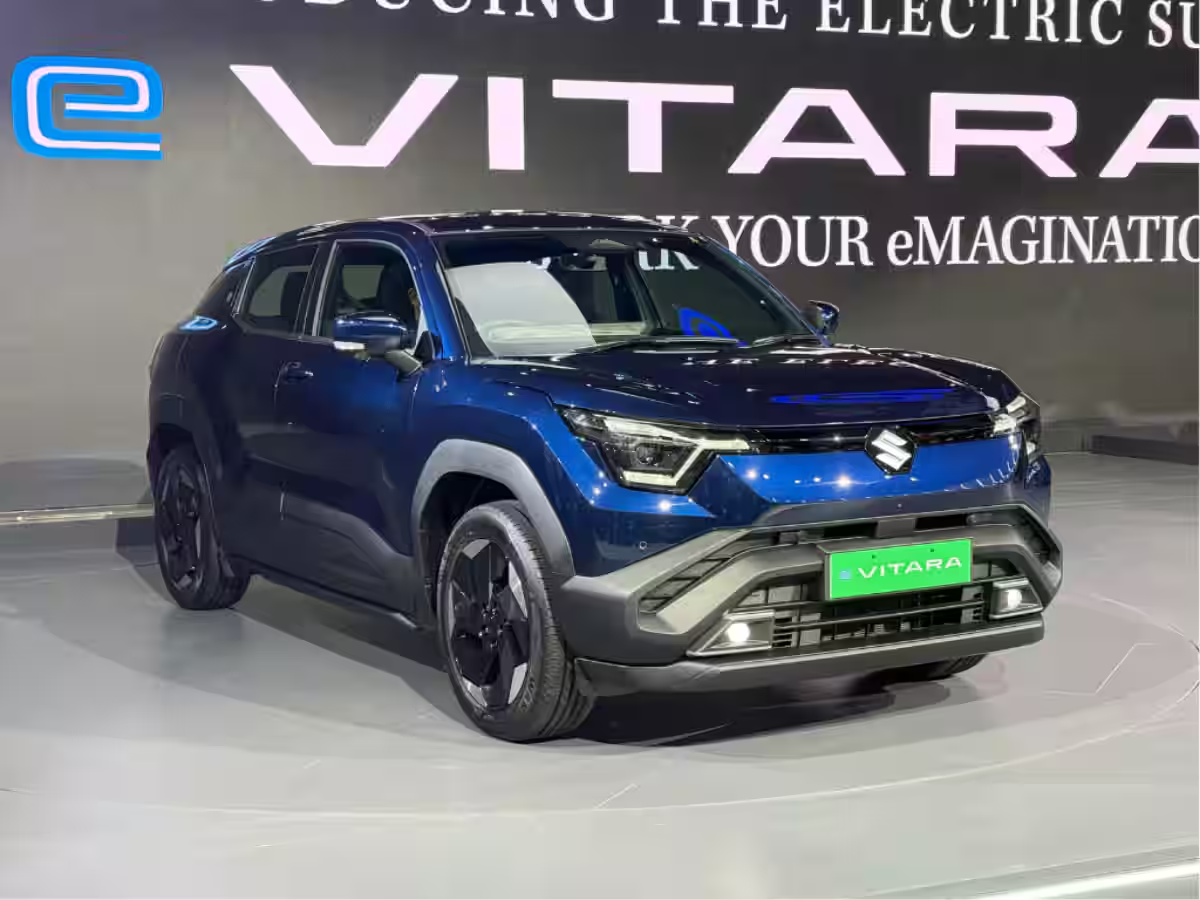
Maruti Suzuki e-Vitara is Maruti’s first all-electric SUV, set to launch in India on December 2, 2025, through its NEXA network, with an expected price range of ₹17–22.5 lakh (ex-showroom). This “born-electric” mid-size SUV is based on the global e-VITARA revealed in Europe, developed on Suzuki’s dedicated HEARTECT-e EV platform co-developed with Toyota.

With two battery options (49 kWh and 61 kWh), an expected range of up to 500 km, Level 2 ADAS, premium interiors, and a strong export footprint already in Europe, the Maruti Suzuki e-Vitara is poised to become one of the most important electric SUVs in India’s fast-growing EV market.
Maruti Suzuki e-Vitara is the most anticipated electric SUV of 2025. As the first fully electric vehicle from India’s largest automaker, it is more than just a product release — it is a major milestone for the country’s automotive and clean-mobility future. Maruti Suzuki has dominated the internal combustion engine (ICE) market for over four decades, and with the e-Vitara, the company is finally entering the electric future with full force.
Electric SUVs are quickly becoming the preferred choice among urban and semi-urban buyers, thanks to rising fuel prices, government incentives, and improved charging infrastructure. The e-Vitara is poised to enter this growing segment and challenge the likes of Tata Curvv EV, Hyundai Creta EV, MG ZS EV, Mahindra BE.06, and others.
What is the Maruti Suzuki e-Vitara?
The Maruti Suzuki e-Vitara is the company’s first mass-production battery electric vehicle (BEV) and its first all-electric SUV for India. It is the production version of the Maruti eVX concept, first shown at the Auto Expo 2023 in India and later at the Japan Mobility Show.

Key positioning points of the Maruti Suzuki e-Vitara:
Born-electric platform: Built on the dedicated HEARTECT-e skateboard architecture, optimised for battery packaging, range and interior space.
Global model, made in India: Produced at Maruti Suzuki’s Gujarat plant (Hansalpur), with a large export share earmarked for Europe and Japan.
Mid-size SUV segment: Dimensions and pricing place it against Tata Curvv EV, Hyundai Creta EV, MG ZS EV, MG Windsor EV Pro, and Mahindra’s BE SUVs.
Family-focused EV: Five-seater layout, long wheelbase, practical boot, and premium yet user-friendly features rather than flashy gimmicks.

For Indian buyers, the Maruti Suzuki e-Vitara combines the familiarity and reliability of Maruti with the latest EV tech and a long range that can genuinely replace a petrol or diesel SUV for most use cases.
Maruti Suzuki e-Vitara Launch Date, Bookings & Variants
Launch timeline
India price announcement: December 2, 2025, via NEXA dealerships and online channels.
Global unveil: The Suzuki e-VITARA in Milan, Italy, in November 2024.
Production start: Spring 2025 at the Gujarat plant.

Exports: Began in mid‑2025 to Europe; several thousand units have already been shipped to markets like the UK, Germany, France, Norway and Sweden.
Bookings
Pre-bookings open at NEXA outlets and online platforms.
Token booking amount: ₹21,001 in many markets as per early dealer communications and reports.
Expected variants of Maruti Suzuki e-Vitara
While exact variant names may differ by launch, typical variant logic is already reported:
Battery options:
- 49 kWh (single motor, FWD)
- 61 kWh (single motor, FWD)
- 61 kWh with ALLGRIP-e AWD (dual motor) – more likely on higher trims or later rollout.
Likely trims (example structure):
- Entry variant with 49 kWh battery (focus on value)
- Mid variant with 61 kWh battery (long-range FWD)
- Top variant with 61 kWh and added features; AWD could be optional depending on the final decision for India.
Having multiple battery and powertrain options makes the Maruti Suzuki e-Vitara suitable for both urban commuters and long-distance highway users.
Maruti Suzuki e-Vitara Design, Dimensions & Road Presence
Dimensions of Maruti Suzuki e-Vitara
The Maruti Suzuki e-Vitara stays close to the eVX concept in terms of stance and proportions.
Approximate key dimensions:
- Length: 4,275 mm
- Width: 1,800 mm
- Height: ~1,635–1,640 mm
- Wheelbase: 2,700 mm
This places the Maruti Suzuki e-Vitara squarely in the mid-size SUV class, comparable to the Hyundai Creta EV and Tata Curvv EV in footprint, but with a slightly longer wheelbase for better cabin space and battery packaging.

Exterior design
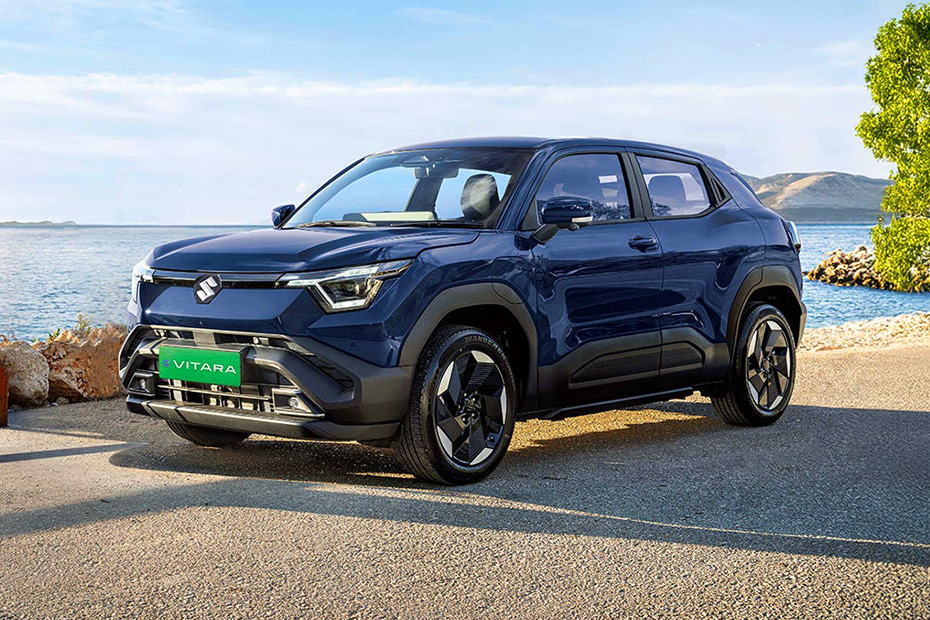
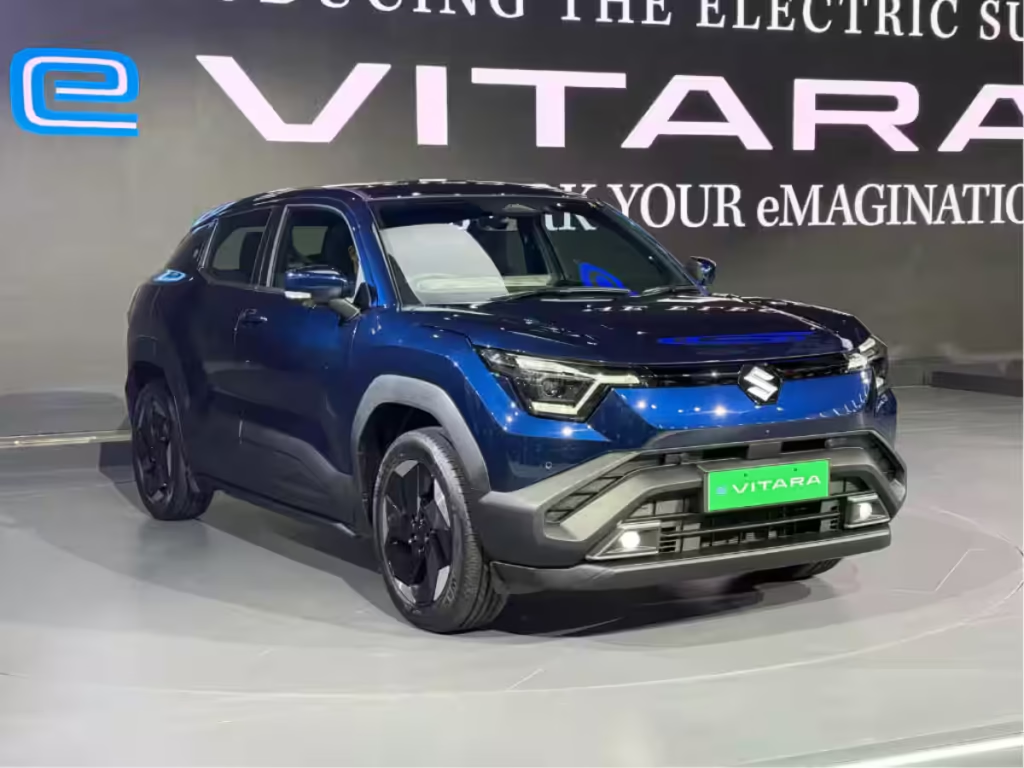
Maruti Suzuki e-Vitara follows a “High-Tech & Adventure” theme with a clean yet muscular SUV stance.
Design highlights:
- Closed-off EV grille with sleek LED headlights and DRLs
- Strong shoulder line and squared-off wheel arches
- Aerodynamic alloys and EV-specific wheel design
- High bonnet and upright stance give it a tough SUV look
- Connected LED tail-lamp setup at the rear (on higher trims)
- Optional dual-tone paint schemes and contrast roof in many markets
The Maruti Suzuki e-Vitara’s styling is deliberately more “SUV-like” and less coupe-ish than some rivals, appealing to buyers who want a traditional SUV silhouette with modern EV details.
Maruti Suzuki e-Vitara Interior, Space & Comfort Features
Inside, the Maruti Suzuki e-Vitara aims to offer one of the most premium cabins yet in a Maruti vehicle, while staying functional and easy to live with.
Cabin design & layout
Reported interior highlights include:
- A dual-tone dashboard, often in black and tan/brown themes, for a premium feel
- A wide floating touchscreen infotainment unit at the centre
- Fully digital instrument cluster with EV-specific information
- Chunky two-spoke or three-spoke steering wheel with steering controls
- Dedicated EV drive-mode selector and electronic gear selector
- Plenty of soft-touch materials on key touchpoints in higher variants
Space & practicality
The long 2,700 mm wheelbase and flat-floor EV platform give the Maruti Suzuki e-Vitara an advantage in cabin room.
- Comfortable seating for five adults
- Good knee-room and headroom at the rear
- Flat rear floor improves comfort for the middle passenger
- Practical boot space suitable for family weekend trips
- Split-fold rear seats for additional flexibility
Comfort & convenience features
The Maruti Suzuki e-Vitara is expected to be feature-rich, especially in higher trims, with items such as:
- Ventilated front seats
- Panoramic or large electric sunroof (fixed or sliding, depending on variant)
- 10+ inch touchscreen with Apple CarPlay and Android Auto
- Premium audio system (Harman Kardon or similar in some markets)
- Ambient cabin lighting
- Wireless phone charger
- Automatic climate control
- Power-adjustable driver’s seat (up to 10-way in some variants)
- Rear AC vents and multiple USB-C / USB-A ports
- Connected car tech (Suzuki Connect) with remote control features
All of this makes the Maruti Suzuki e-Vitara feel significantly more upmarket than many existing Maruti models, aligning it with premium NEXA positioning.
Maruti Suzuki e-Vitara Battery, Motor, Range & Performance
The Maruti Suzuki e-Vitara is built around an efficient electric powertrain using lithium iron-phosphate (LFP) “blade” cells, integrated with an eAxle that combines motor and inverter.
Battery options
Two main battery choices are expected for India:
- 49 kWh battery
- Layout: Single motor, front-wheel drive
- Power: Around 142–144 hp
- Torque: 189 Nm
- Certified range: ~344 km WLTP, higher on Indian MIDC cycle (ARAI)
- 61 kWh battery
- Layout: Single motor, FWD (with optional AWD globally)
- Power: Around 172–174 hp in FWD
- Torque: 189 Nm (FWD)
- Certified range: Over 500 km on Indian test cycle, ~428 km WLTP in some configurations
On the dual-motor ALLGRIP-e AWD version:
- Additional rear motor: ~65 hp
- Combined output: 184 hp, 300 Nm
- WLTP range: Around 394 km for AWD with a 61 kWh battery
Performance & drive feel
Reported performance metrics for Maruti Suzuki e-Vitara variants include:
- 0–100 km/h in under 9 seconds for most configurations
- Smooth and instant EV torque for city traffic
- Stable highway cruising with a quiet cabin
- Multiple drive modes (Eco, Normal, Sport, and Trail mode on AWD)
Torque figures are not class-leading on paper compared to some rivals like Tata Curvv EV, but Maruti prioritises efficiency, predictability and reliability—a core brand philosophy.
For daily use, the Maruti Suzuki e-Vitara should feel sufficiently quick while delivering excellent real-world range.
Charging the Maruti Suzuki e-Vitara: Home & Public Options
Home charging
Every Maruti Suzuki e-Vitara buyer is expected to receive a home AC charger with installation support.
- Typical AC home charging time:
- 7.2 kW AC wall box: Several hours for 0–100% (varies by battery size)
- Ideal for overnight charging at home or the workplace
Maruti Suzuki is also planning to create a robust service and workshop network with EV-ready workshops in 1,000+ cities, giving owners confidence about long-term support.
DC fast charging
Fast-charging capability is critical for long trips and convenience. The Maruti Suzuki e-Vitara supports DC fast charging on high-output chargers:
On some setups, 20–80% in about 30 minutes using a 150 kW DC charger (global figures)
On India-specific chargers, Maruti Suzuki claims approximately 0–80% in 40–50 minutes for the larger pack in many reports.
Maruti is also working with partners and its own network to roll out a public charging ecosystem, with plans to cover top Indian cities with chargers every 5–10 km along key routes.
This combination of long range + fast DC charging + strong home charging support makes the Maruti Suzuki e-Vitara one of the more practical EV SUVs for Indian conditions.
Safety, ADAS & Crash Protection in Maruti Suzuki e-Vitara
Safety is a major focus on the Maruti Suzuki e-Vitara, both in structure and technology.
Body structure & battery safety
- Over 50% high-tensile steel is used in the body structure for better crash performance.
- Dedicated battery protection structure integrated into the platform.
- Rigorous global testing for EV-specific safety.
Standard & available safety equipment
Depending on trim, the Maruti Suzuki e-Vitara offers:
- Seven airbags
- All-wheel disc brakes
- Electronic Stability Control (ESC)
- Tyre Pressure Monitoring System (TPMS)
- Electronic parking brake with auto hold
- Hill hold and hill descent control (on AWD/upper trims)
- 360-degree camera
- Rear parking sensors and camera
- ISOFIX child seat mounts
ADAS (Advanced Driver Assistance Systems)
Higher variants of the Maruti Suzuki e-Vitara are expected to feature Level 2 ADAS, including:
- Adaptive Cruise Control
- Lane Keeping Assist / Lane Departure Warning
- Autonomous Emergency Braking (AEB)
- Traffic sign recognition (in some markets)
- Blind Spot Monitoring (likely in top trims)
Some versions also feature an e-Call emergency system, which automatically contacts emergency services in case of a serious crash.
These features make the Maruti Suzuki e-Vitara one of the safest Maruti SUVs yet, aligning it with global safety expectations.
Expected Price of Maruti Suzuki e-Vitara & Running Costs
Expected ex-showroom price range
Most credible reports suggest the Maruti Suzuki e-Vitara will be priced between:
- ₹17–18 lakh for 49 kWh base variants
- ₹20–22.5 lakh for 61 kWh mid and top variants
- AWD or fully loaded trims (if offered) could approach ₹23–25 lakh
This pricing strategy puts Maruti Suzuki e-Vitara in direct competition with Tata Curvv EV, Hyundai Creta Electric, MG ZS EV and MG Windsor EV Pro, all of which sit in the ₹17–25 lakh band.
Running cost advantage over ICE SUVs
For a typical user driving 1,200–1,500 km per month:
- Electricity cost (home charging) is often ₹1.5–2 per km, depending on the state tariff.
- A comparable petrol SUV could cost ₹7–10 per km in fuel alone.
Over 5 years, the total fuel savings of the Maruti Suzuki e-Vitara versus a petrol/diesel SUV can easily run into several lakhs, especially when combined with lower maintenance costs (no engine oil, fewer moving parts, regenerative braking reducing brake wear).
Maruti Suzuki e-Vitara vs Rivals: Curvv EV, Creta EV, MG ZS EV & Others
The Maruti Suzuki e-Vitara enters a crowded mid-size EV SUV space, with multiple strong rivals.
A quick conceptual comparison (approximate, segment-level):
| Model | Battery Options (kWh) | Range (Claimed) | Price Band (Approx) |
|---|---|---|---|
| Maruti Suzuki e-Vitara | 49 / 61 | Up to 500 km | ₹17–22.5 lakh |
| Tata Curvv EV | ~45 / 55 | Up to ~502 km | ₹17.5–22 lakh |
| Hyundai Creta Electric | ~42 / 51.4 | ~390–473 km | ₹17.99–24.37 lakh |
| MG ZS EV / Windsor EV Pro | ~50–53 | ~449 km | ₹17.5–24 lakh |
| Mahindra BE 05 / BE 6 | Multiple packs | Competitive range | Similar mid–upper band |
Where the Maruti Suzuki e-Vitara stands out:
- Range: Up to 500+ km on Indian test cycles for the 61 kWh pack positions it very strongly on range.
- Brand trust & service network: Maruti’s nationwide network and reliability reputation can be a major comfort factor for first-time EV buyers.
- Price–value balance: Expected pricing is competitive without being the cheapest, but offers a strong combination of range, features and peace of mind.
Where rivals may have an edge:
- Some rivals offer higher peak torque or more aggressive performance-focused tuning.
- A few may offer more avant-garde or coupe-like styling, which appeals to certain buyers.
For most mainstream buyers looking for a balanced family EV SUV, the Maruti Suzuki e-Vitara’s package is highly compelling.
EV Incentives & How They Affect Maruti Suzuki e-Vitara Ownership
Government incentives significantly reduce the effective on-road price of EVs in India.
Central schemes (example: FAME-style benefits)
Newer policy frameworks like FAME III introduce or extend subsidies for four-wheelers, often up to ₹1.5 lakh per vehicle, depending on battery size and eligibility.
Key elements:
- Direct subsidy based on battery capacity (₹/kWh)
- Focus on localisation – higher benefits for EVs with strong Made-in-India content
- Additional support for charging infrastructure across major corridors
If the Maruti Suzuki e-Vitara qualifies under the prevailing scheme at launch, buyers could see a meaningful reduction in effective price, especially on the larger 61 kWh variants.
State-level incentives
Several states provide additional benefits, like:
- Road tax and registration fee waivers (up to 100% in some states)
- Extra state subsidies on top of central schemes
- Parking benefits or green number plate perks in some cities
States like Gujarat, Maharashtra, Delhi, Tamil Nadu, Telangana and Kerala have historically offered strong support to EVs through tax waivers and other benefits.
For a Maruti Suzuki e-Vitara buyer:
- Check the central subsidy available at the time of purchase.
- Combine it with any state-specific subsidy and road tax waivers.
- The total benefit can sometimes reduce the effective cost by ₹1.5–3 lakh or more, depending on policy and vehicle eligibility.
Who Should Buy the Maruti Suzuki e-Vitara?
The Maruti Suzuki e-Vitara is best suited to:
- Urban families wanting a premium yet practical SUV for daily use and weekend trips
- High-mileage drivers (1,000–1,500+ km/month) who want to cut fuel costs drastically
- First-time EV buyers who value Maruti’s service network and brand trust
- Tech-enthusiast owners looking for advanced features like ADAS, 360° camera, connected car tech and long range
- Environment-conscious buyers wanting to move away from ICE vehicles without sacrificing comfort and usability
If you mostly drive short distances (10–40 km/day) with occasional highway trips, the 49 kWh Maruti Suzuki e-Vitara will likely be enough. If you do frequent long highway runs, the 61 kWh long-range variant is the better choice.
Conclusion
Maruti Suzuki e-Vitara is not just another new model; it is Maruti’s first serious step into the future of electric mobility in India. Launching on December 2, 2025, this mid-size SUV combines a 49 kWh and 61 kWh battery pack delivering up to 500 km range, a practical five-seater cabin, and advanced features like Level 2 ADAS, ventilated seats, panoramic sunroof, and a 360° camera. Built on the dedicated HEARTECT-e platform and backed by Maruti’s nationwide service network, Maruti Suzuki e-Vitara is positioned as a realistic upgrade for families who want to move away from petrol and diesel without sacrificing comfort, space, or usability.
For buyers who have been waiting for a trustworthy, easy-to-own EV from a mainstream brand, Maruti Suzuki e-Vitara offers a blend of range, reliability, and running-cost savings that can genuinely replace a traditional ICE SUV in day-to-day life. Instead of wondering if an EV will fit your lifestyle, this SUV is designed to make that transition as smooth as possible.https://mizulet.com/



Leave a Comment